Somatic Experiencing
A body-oriented approach to healing trauma and other stress-related disorders by releasing pent-up energy.
Internal Family Systems
Exploring your inner world to transform stuck parts into a harmonious system of self-leadership and healing.
Breathwork
Conscious breathing techniques to release tension, regulate the nervous system, and improve focus.
CBT
Understanding the connection between thoughts, feelings, and behaviors to develop practical coping strategies.
EMDR
Desensitizing traumatic memories through bilateral stimulation to reduce their emotional impact on your life.
Ways We Help You Heal

One on One Support
Gentle, personal body-based care for first responders and community members. We help with injury, worry, and low moods using proven tools like Somatic Experiencing and mindfulness that respect exactly who you are and what you have been through.

Support for Partners
Targeted recovery for partners navigating high-stress careers. We provide an inviting atmosphere to foster resilience through meaningful dialogue and effective techniques to soothe the nervous system and strengthen relationships.
First Responder Support
- Trauma-informed care designed for the physical and emotional weight of service.
- Somatic methodology to help navigate hyper-vigilance and post-service stress.
- A safe haven to process duty-related experiences and restore personal peace.
Community Wellness
- Holistic strategies for managing day-to-day anxiety and nervous system health.
- Customized healing sessions focused on physical grounding and emotional clarity.
- Supportive guidance to help you find stability and connection in your everyday life.
Healing Journeys
Voices of restoration and resilience from those who have found their center through somatic support.
"I spent years feeling hyper-vigilant after shifts. Somatic therapy helped me finally find a sense of safety in my body that I didn't think was possible again."
Firefighter | Edmonton
"Navigating daily anxiety felt like a full-time job. Somatics gave me gentle tools to regulate my system and show up more fully for my children."
Parent | Stony Plain
"Healing from PTSI isn't linear, but having a body-centered space where I felt truly understood allowed me to process trauma at my own pace."
Healthcare Professional | Spruce Grove
Whenever you are ready, we are here to support your path toward peace. Reach out to start your own story of recovery.
The Somatic Approach
Healing trauma is about more than talking. It's about reconnecting with the innate safety and wisdom held within your own body.
A Body-Based Path
A somatics-first approach means we listen to your nervous system. By focusing on physical sensations rather than just analyzing memories, we can gently resolve the “thawed” stress responses that keep first responders and trauma survivors feeling stuck.
How It Feels
Sessions are calm, gentle, and entirely choice-centered. You are the expert on your experience. We work at your pace to create a sense of internal stability, helping you find your “anchor” amidst the waves of anxiety or PTSI symptoms.
Why It Works
Trauma lives in the body. Traditional talk therapy can sometimes overwhelm the system; somatics allows the brain and body to synchronize healing. This regulation leads to lasting relief from the hyper-vigilance often experienced in high-duty professions.
How to decide if SE vs talk therapy is right for you
Here are some practical factors to consider:
Your symptoms / presentation
If you have trauma with strong bodily/somatic symptoms (e.g., chronic pain, hyperarousal, dissociation, “body keeps the score” type issues), then SE might be especially relevant.
If your primary challenges are cognitive (negative beliefs), mood, interpersonal issues, or you like verbal-insight-driven work, then talk therapy might be more comfortable or effective initially.
Your therapist / training
Make sure the therapist is genuinely trained in SE (certified, experienced) if you go that route. Because the modality is more specialised, quality and fidelity matter.
Your preference / comfort
Some people feel more comfortable talking, others more comfortable with body-based, experiential work. It’s fine to ask how much “talk” vs “body-sensation work” the clinician does.
Integration
If possible, consider whether you might combine or alternate approaches (e.g., SE plus CBT or psychodynamic talk therapy) rather than picking strictly one.
Session count / goals
Ask about how many sessions are typical, what the goals are, how progress is measured.
Research and evidence for your use-case
Check if there is evidence for your particular challenge (e.g., trauma, chronic pain, anxiety). SE has more evidence for trauma/ PTSD than for all possible issues.
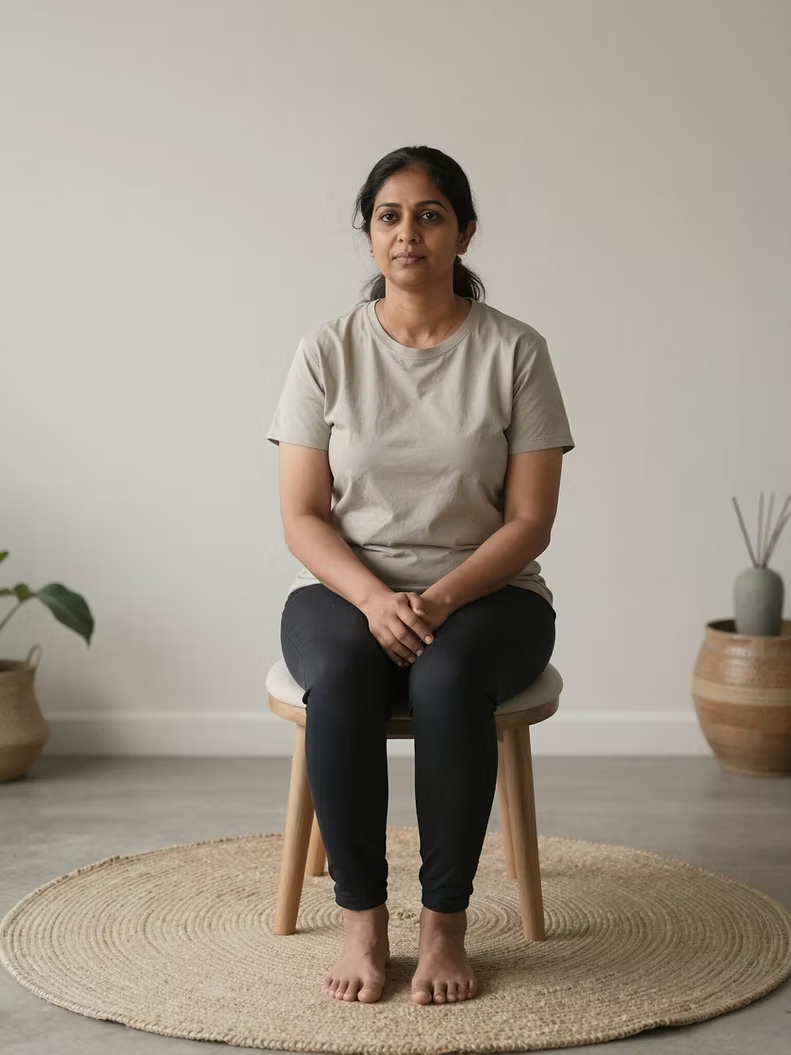
Truly Lived Support
Our sessions are led by someone who has walked this path and recovered from deep service-related stress four times. This personal history creates a real bond of trust, making sure that first responders and their loved ones feel truly seen and heard throughout their journey back to wellness.
Combining clinical expertise with lived experience, we provide a safe and stable environment for recovery. We offer the authentic connection and effective strategies essential for navigating the complexities of a career in service, helping you reconnect with your sense of self.
2SLGBTQIA+ friendly
We respect your pronouns, name, and lived experience.
The Heart of Somatics First
About Me
Guided by lived experience and specialized training in somatic healing to help you find your steady center.
My professional path is rooted in a deep commitment to trauma recovery. I bring together the science of Somatic Experiencing (SE) with the clarity of Internal Family Systems (IFS), Cognitive Behavioral Therapy (CBT), Breathwork, and EMDR. This blend of modalities allows us to address not just the stories you hold, but the physical sensations and nervous system responses that often tell the deeper truth of your experience.
Beyond clinical training, I carry a personal understanding of trauma and PTSI. Having navigated high-stress service environments myself, I know that recovery isn't just a clinical goal—it's a lived necessity. Everyone experiences stress in one form or another. When it is overwhelming, and sometimes we do not know that it has overwhelmed us, a Post Traumatic Stress Injury can develop. The first experience when I encountered this was as a Power Engineer in the mid-90's. Subsequently I was drawn to the first responder field with 27 years as a firefighter and 22 years as a Paramedic (much of this overlapping in a dual role function). After two more experiences with stress related disorders and being off work, I retired in 2022. That culminated in another breakdown and a desire to find out what was wrong with me, why talk therapy was not getting to the root. A friend suggested and provided me with Somatic Experiencing. That led to even deeper work and a revelation as to why I had become a first responder, which happened to be the same reason I was off work several times. It was so impressive I had to share with others and sought out training. This shared history means I meet you with a presence that is both grounded and authentic, recognizing the heavy weight of duty and the immense resilience required to move through it.
In our work together, your agency is paramount. My approach is gentle and choice-centered, ensuring you always feel in control of the pace and direction of your healing. I hold a sacred space for all that you are, honoring your gender identity, your spirituality, and the unique wisdom of your own spirit. This is a place of absolute respect, designed to let you breathe, reconnect, and heal at a pace that feels safe for you.
Find Your Anchor
Stony Plain, AB | Mon – Fri: 9:00 am – 5:00 pm
Your privacy is our anchor. All communication is kept strictly confidential, unless there is an imminent risk to your safety or the safety of others.
Located 20 minutes west of Edmonton in Stony Plain for in-person sessions
Find Your Anchor
We’re here for you. All information you share is kept in strict confidence, held with respect for your privacy and consent.
Get in touch
We're here to support you on your journey. Please fill out the form below and we will get back to you shortly.
First Name Last Name email address how can we help? location Hours: Mon–Fri: 9am–5pm. Limited after-hours support available for first responders.